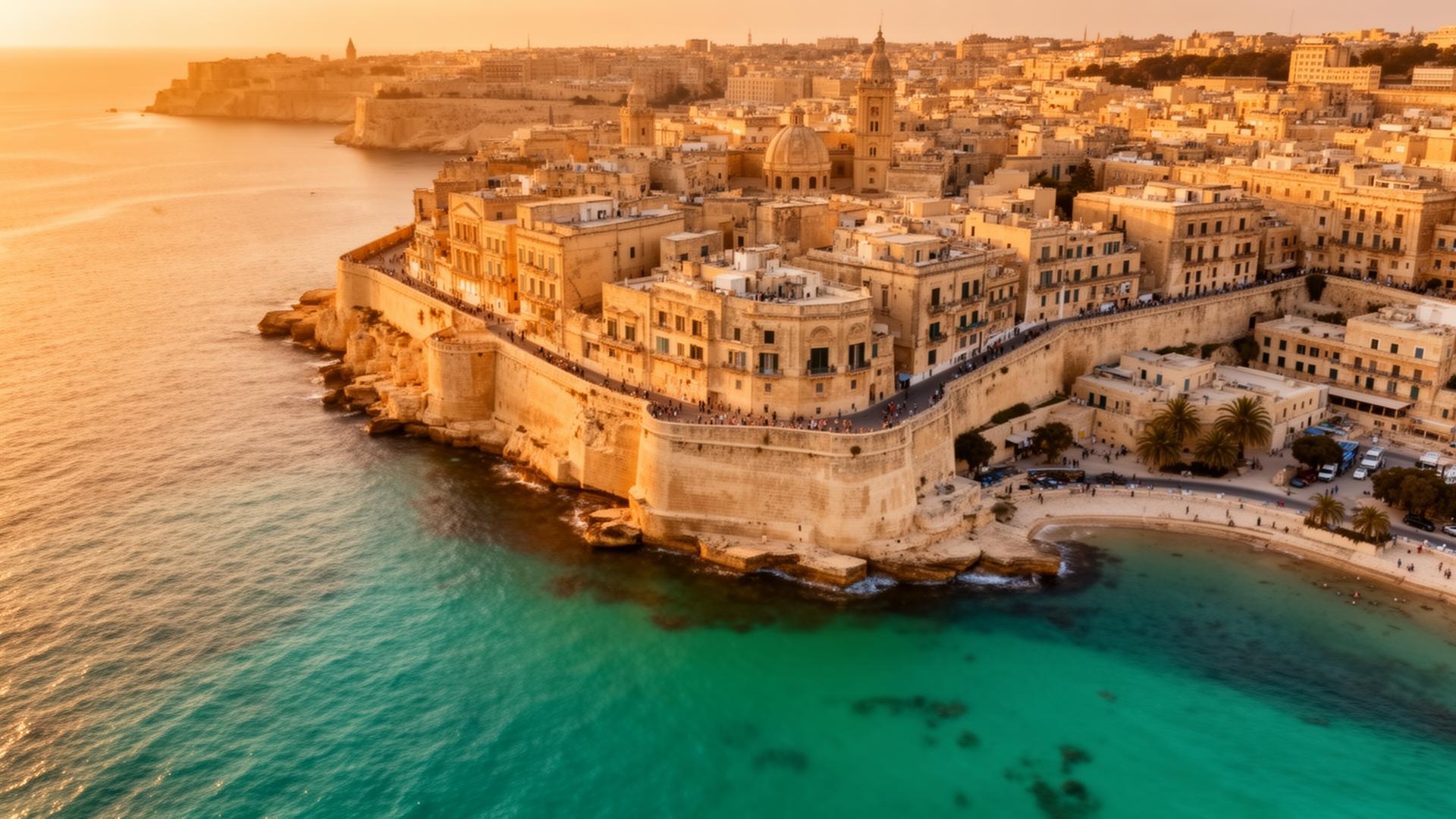
2026 Malta Student Visa Guide for Tunisian Students
The complete step-by-step guide by a licensed Tunisian education agency. Everything you need — visa types, documents, financial proof, refusal reasons, and life after arrival in Malta.
A practical guide written for Tunisian students, by a Tunisian agency.
Malta Study has created this practical guide to help Tunisian students navigate the visa process with clarity and confidence. We've handled hundreds of files and we know exactly which details Maltese consular officers look for — and which silent mistakes cause refusals.
This guide is updated for 2026 procedures and reflects the realities of applying from Tunis. Read it from top to bottom, or jump to the section you need: visa types, the application process, required documents, financial requirements, common refusal reasons, and life after arrival in Malta.
Types of student visas in Malta
| Visa Type | Duration |
|---|---|
National Long-Stay Visa (D) Full-time studies, diploma & degree programmes The standard route for Tunisian students enrolled in a Maltese MFHEA-accredited institution. | Over 90 days |
Schengen Short-Stay Visa (C) Short courses, summer schools, language programmes under 90 days Cannot be converted into a residence permit. Choose this only for genuinely short programmes. | Up to 90 days |
Residence Permit (after arrival) Issued in Malta after you arrive on a D visa Applied for at Identità (formerly Identity Malta) within the first weeks after arrival. | Renewable yearly |
Step-by-step visa application process
- 01
Get your acceptance letter
Apply to an MFHEA-accredited Maltese institution and obtain your official acceptance letter. This is the foundation of the entire file — without it, no visa application can move forward.
- 02
Prepare your financial proof
Tunisian students typically need to show stable funds covering tuition, living costs and return travel. Bank statements over the last 3–6 months, sponsor letters from parents, and notarised financial guarantees are the standard combination.
- 03
Take out health insurance
An EU-recognised travel health insurance policy covering your full stay (minimum 30,000 EUR coverage) is mandatory. We help families pick a Tunisian or international provider accepted by the Maltese consulate.
- 04
Confirm accommodation
A signed rental agreement, hosting letter, or student-residence booking covering at least the first months in Malta. Tunisian applicants are increasingly asked for solid accommodation proof — don't skip this step.
- 05
Submit your visa file
Tunisian applicants apply through the Maltese consulate handling Tunisia (currently via VFS / the designated visa centre). Submit a complete dossier — incomplete files are the #1 cause of delays and refusals.
- 06
Travel & residence permit
Decisions typically arrive within 4–8 weeks. Once approved, plan your arrival and apply for your residence permit in Malta within the first weeks at Identità.
Required documents for Tunisian applicants
A complete file is the single biggest factor in approval. Print this checklist and tick items off as you gather them.
- Valid Tunisian passport (≥ 3 months beyond intended stay, with 2 blank pages)
- Completed Maltese national visa application form, signed
- Two recent biometric photos meeting Schengen standards
- Official acceptance letter from an MFHEA-accredited institution
- Proof of full tuition payment or first-instalment receipt
- Bank statements (last 3–6 months) — applicant and/or sponsor
- Notarised sponsorship letter from parents (if applicable)
- Travel health insurance — minimum 30,000 EUR coverage
- Accommodation proof (rental contract, residence booking, or host letter)
- Round-trip flight reservation (not paid ticket)
- Birth certificate (extrait de naissance) — translated to English
- Police clearance (Bulletin n°3) — issued within the last 3 months
- Academic transcripts and diplomas — translated to English
- Motivation letter explaining your study plan in Malta
- Visa fee payment receipt
How much money do you need to show?
Maltese consular officers want to see that you can cover tuition, accommodation, food, transport, and personal expenses for the full academic year — without working illegally or burdening public funds.
For Tunisian applicants, a realistic 2026 budget is between 8,000 and 12,000 EUR per year on top of tuition. Stronger files often show 15,000 EUR or more, especially when the family covers two siblings or expensive programmes.
Tip for Tunisian families: present statements from a single, stable account when possible. Multiple last-minute deposits from different sources weaken the file.
Why Tunisian applications get refused — and how to avoid it
After reviewing hundreds of Tunisian files, these are the recurring patterns. Address them upfront and you remove the most likely refusal grounds.
Incomplete or inconsistent financial proof
Statements that don't match the sponsor letter, sudden large deposits without explanation, or missing months. Build a coherent 6-month financial story before applying.
Weak motivation letter
Generic letters that could apply to any country. Tunisian applicants must clearly explain why Malta, why this programme, and how it fits their career plan back home or in Europe.
Suspicion of migration intent
If the consulate believes you don't intend to leave the Schengen area after studies, the file is refused. Demonstrate ties to Tunisia: family, property, return plan.
Non-accredited institution
Only MFHEA-accredited Maltese institutions qualify. Always verify accreditation before paying tuition — Malta Study only works with verified partners.
Insufficient health insurance
Policies under 30,000 EUR or not valid throughout the Schengen area are rejected. Double-check coverage dates and territorial scope.
Late or rushed application
Files submitted weeks before the programme start are routinely refused for lack of processing time. Apply at least 8–12 weeks ahead.
Your first weeks in Malta
- 01
Register at your institution
Complete in-person enrolment, get your student ID, and confirm your class schedule.
- 02
Apply for the residence permit at Identità
Submit your residence-permit file (passport, acceptance, accommodation, insurance, biometrics) within the first weeks. This permit replaces your D visa for the rest of your stay.
- 03
Open a Maltese bank account
BOV, HSBC Malta, or Revolut — useful for paying rent, receiving salary if you work, and renewing your permit.
- 04
Get your Tallinja transport card
The personalised card gives students reduced fares on Malta's public bus network.
- 05
Register with a doctor (optional but recommended)
Even with health insurance, registering with a local GP makes appointments faster.
Get the 2026 Tunisian Visa Toolkit
Drop your email and we'll send you the printable 2026 Visa Checklist for Tunisian Students plus an eligibility self-assessment tool — free, no spam.
2026 Visa Checklist for Tunisian Students
Documents, embassy tips, common refusal reasons, printable timeline.
Eligibility Self-Assessment for Tunisians
Answer 10 questions and get an honest estimate of your visa chances.
Frequently asked questions from Tunisian families
Can Tunisian students work while studying in Malta?
+
Yes. After the first 90 days of your studies, international students can work up to 25 hours per week with a work permit issued by Jobsplus. During holidays you can typically work full-time.
How much money do I need to show for a Malta student visa?
+
There is no single fixed figure, but Tunisian families should typically prepare proof of around 8,000–12,000 EUR per year covering tuition, accommodation, and living costs. Higher amounts strengthen the file significantly.
How long does the Malta student visa take for Tunisian applicants?
+
Processing is usually 4 to 8 weeks once the consulate receives a complete file. We recommend submitting at least 2–3 months before the programme starts.
Do I need to speak English to apply?
+
Maltese institutions teach in English, so most programmes require a recognised English certificate (IELTS, TOEFL, Duolingo) or proof of prior English-medium education. Some partners accept an internal English assessment.
Can my family visit me in Malta during my studies?
+
Yes. Once you have your residence permit, your family can apply for short-stay Schengen visas to visit. Some long-term programmes also allow family-reunification visas under specific conditions.
What if I'm refused — can I reapply?
+
Yes, you can reapply or appeal. Most refusals come from fixable issues (financial proof, motivation, accommodation). As your agency, we review the refusal reason and rebuild a stronger file before resubmitting.
Is the visa fee refundable?
+
No. The Maltese national visa fee is non-refundable, regardless of the decision. This is one more reason to submit a fully reviewed, complete file the first time.
Do I need to apply in person?
+
Yes — biometric data is collected at the visa centre. You'll book an appointment, attend in person with your dossier, and submit your fingerprints and photo.
Can I switch programmes or institutions after arriving?
+
Yes, but the change must remain within MFHEA-accredited programmes and be notified to Identità. Switching to a non-accredited course can invalidate your residence permit.
Does Malta lead to a path to stay in Europe after studies?
+
Yes. Graduates can apply for a post-study work permit or transition to a regular work residence permit if they secure employment with a Maltese employer.
Need personalized help with your student visa?
Send us your situation and we'll review your file, flag what's missing, and walk you through every step — usually within the same day.
Contact Our Agency for Free Consultation